Basic Course NR10

- Descrição
- Currículo
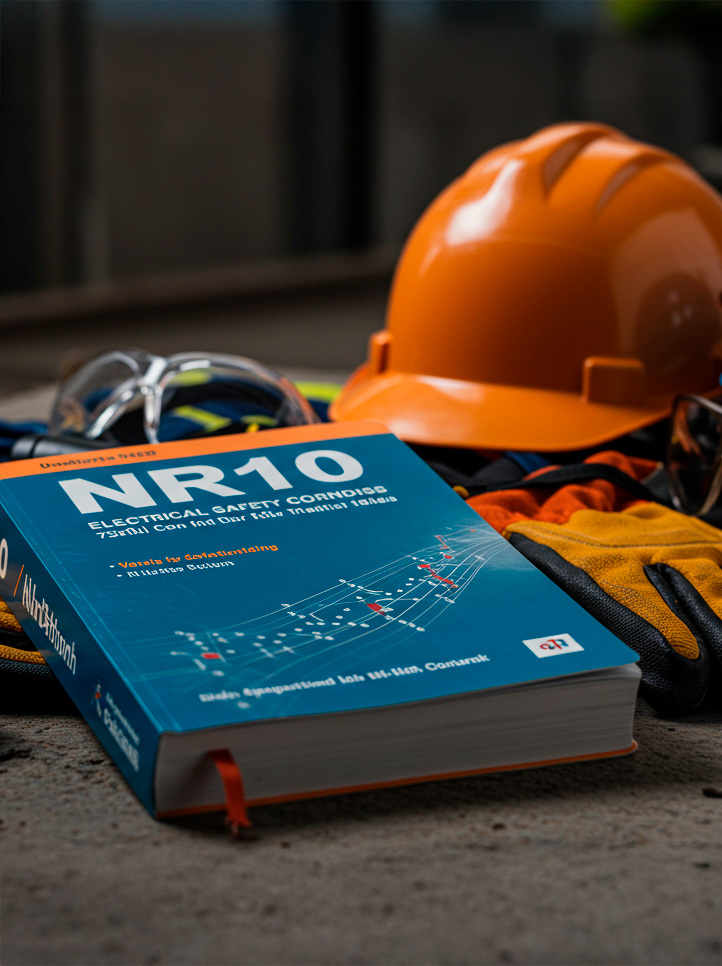
The objective of the NR 10 Course is to cover, in an educational and easy-to-understand manner, all topics covered in Regulatory Standard NR-10, issued by the Ministry of Labor. This standard aims to protect the safety and health of workers who interact with electrical installations and services, including their design, construction, assembly, operation, and maintenance stages, as well as any work performed nearby. The content of the Intensiva Cursos Basic NR 10 Course was developed by professionals in the fields of Electrical Engineering (Electrical Engineer), Occupational Safety (Occupational Safety Technician), and Health/First Aid (ICU Nurse). Target Audience: Workers in electrical services, Occupational Safety professionals, students, and the general public seeking to learn about NR 10. The Basic NR 10 Course consists of the following content: * What are Regulatory Standards; * NR 10 – Safety in Electrical Installations and Services; * Introduction to Electrical Safety; * Standards and legislation applicable to electrical work; * Accidents of electrical origin; * Atmospheric Conditions; * Electric shock, mechanisms, and effects; * Electric arcs, burns, and falls; * Electromagnetic fields; * Risk Analysis Techniques; * De-energization, functional grounding (TN/TT/IT) for protection and temporary use; * Equipotential bonding and automatic power supply disconnection; * Leakage current and extra-low voltage devices; * Barriers and enclosures, obstacles, screens, blockages, and impediments; * Insulation of live parts and double or reinforced insulation; • Additional risks: Height, humidity, confined spaces, classified areas, and out-of-reach placement; * Electrical separation and electrical accidents; * Direct and indirect causes of accidents and case discussion; * MTE regulations: Qualification, accreditation, training, and authorization; Collective protective equipment and personal protective equipment (PPE); * Safety in energized and de-energized electrical installations; * Authorization for services and signaling; * Inspections of areas, services, tools, and equipment; * Required documentation for electrical installations; * Construction safety, field of application, and responsibilities; * Fire protection and fighting; * First aid, injuries, care, cardiac massage, and techniques for evacuation and transportation of injured persons.
-
1
 Introduction to NR-10 training
 -
2
Introduction
-
3
 Supplementary text for module 1
Electricity kills. This is a rather blunt, yet true, way to begin our study of electrical safety. Whenever you work with electrical equipment, hand tools, or electrical installations, you are exposed to the risks of electricity. This happens at work, at home, and everywhere else. You are surrounded by electrical lines everywhere; in fact, we all are. Of course, at work, the risks are much greater. Workplaces are home to a large concentration of machines, motors, panels, distribution boards, transformer substations, and, in some cases, exposed overhead and underground power lines. Furthermore, even those who don’t work directly with circuits are also exposed to the harmful effects of electricity when using hand tools or performing simple tasks such as turning circuits and equipment on or off, if the activation and protection devices are not properly designed and maintained.
While we are all exposed to the risks of electricity, if you work directly with or near electrical equipment and installations, be careful. Contact with energized parts of the installation can cause electrical current to pass through your body, resulting in electric shock and external and internal burns. The consequences of electrical accidents are very serious, causing physical injuries and psychological trauma, and are often fatal. Not to mention fires caused by faults or wear and tear on electrical installations. Perhaps because electricity is so prevalent in your life, you don’t always give it the necessary treatment.
As a result, electrical accidents are still very common, even among qualified professionals. In Brazil, we still don’t have many specific statistics on accidents caused by electricity. However, it’s helpful to know some facts.
In Brazil, if we consider only the Electricity Sector, the so-called sector that encompasses companies operating in the generation, transmission, and distribution of electricity, we have some striking figures. In 2002, there were 86 fatal accidents in this sector, including those involving contractor employees. Added to this number, however, are 330 deaths that occurred that same year, involving members of the public who, in various ways, came into contact with facilities belonging to the Electrical Sector. Examples of these fatal contacts include cases that occurred during construction sites, contact with live cables, illegal connections, TV antenna installations, among many other causes. A comprehensive report is released annually by the COGE Foundation.
Furthermore, among 1,736 workplace accidents analyzed by the Federal Labor Inspection System in 2003, exposure to electrical current was among the leading factors of morbidity/mortality, accounting for 7.84% of the accidents analyzed.
The main risks will be presented, and you will learn to recognize them and adopt procedures and control measures, as required by law and technical standards, to prevent accidents. The safety and lives of many others, including yourself, will depend on your preparation, study, and discipline. Think about it!
-
33
DIFFERENTIAL-RESIDUAL CURRENT PROTECTION DEVICE AND TYPES OF PROTECTION
-
34
Supplementary text for module 10 - Text 1
-
35
Supplementary text for module 10 - Text 2
-
36
Supplementary text for module 10 - Text 3
-
37
Supplementary text for module 10 - Text 4
-
38
Supplementary text for module 10 - Text 5
-
39
Supplementary text for module 10 - Text 6
-
40
 Test for Module 10
-
47
FIRE PREVENTION AND FIGHTING
-
48
fire prevention and fighting
-
49
Supplementary text for module 12 - Text 1
-
50
Supplementary text for module 12 - Text 2
-
51
Supplementary text for module 12 - Text 3
-
52
Supplementary text for module 12 - Text 4
-
53
Supplementary text for module 12 - Text 5
-
54
Test for Module 12